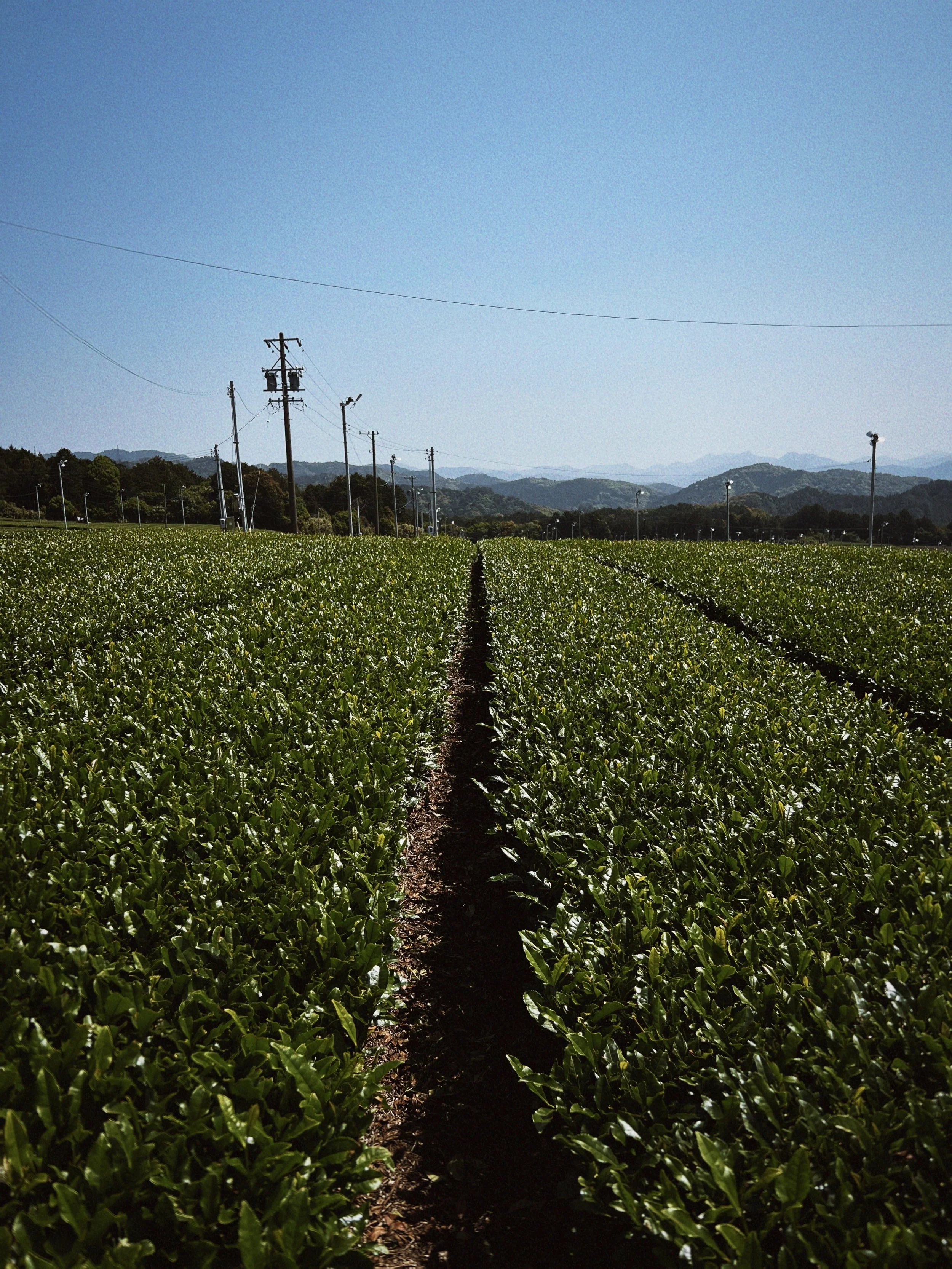
from tea
leaf to tin.
The creation of pristine matcha begins long before harvest going through a delicate and carefully curated process from the tea fields in japan, making it all the way to our cups to enjoy with each sip.
First Harvest - Ichibancha
As spring arrives in Japan, it begins with tender leaves, resting beneath a canopy of filtered light. The shade-grown technique is a time-honored tradition that deepens chlorophyll levels, l-theanine, and aids in the vibrant emerald hues that define high-quality matcha.
Primarily between the months of late April and mid-May, the youngest, most tender leaves are plucked from the top of the plant at peak freshness. First flush leaves are considered the highest quality, resulting in a nutrient dense, sweet matcha with minimal bitterness to taste. The leaves are swiftly steamed and rolled to halt oxidation, preserving their vivid color and pureness. Once dried, the leaves are deveined and de-stemmed, revealing only the soft inner leaf, known as tencha.
The Stone-mill
Using the traditional Japanese method of a stone-mill, tencha is ground at a slow-controlled pace, where 30 grams of ultra-fine powder is produced per hour. This process is used to maintain the integrity of color, aroma, a velvety texture, and maintain nutrients.
To Tin
The freshly milled matcha is packed and sealed with intention and care by our partner farms to protect from light, heat, and humidity, ensuring its flavor and vitality remain uncompromised from the garden to your cup.